The Pennsylvania pension mess: Teachers will help fix it, but they must be
fairly compensated
Wednesday, May 19, 2010
By James P. Testerman
Recent media reports have given considerable coverage to the expected
2012-2013 increase in school district pension costs and what it could mean
for taxpayers. That's fine, but as this public discussion proceeds, we must
not overlook how pension policies affect our schools, students and teachers.
To find real solutions, we must assess the situation from a broader
perspective.
The 2001 passage of the controversial No Child Left Behind law redefined
expectations. Without getting into the pros and cons of the legislation, it
did raise standards for student achievement.
So how have we done?
The Center for Education Policy has applauded Pennsylvania for recording
gains in all academic categories from 2002 through 2008. Pennsylvania
eight-graders showed larger gains than their counterparts in 41 other states
on the 2009 National Assessment of Educational Progress reading test, and
their scores ranked among the highest in the nation. More Pennsylvania
students than ever are choosing higher education.
If Pennsylvania students
were a football team, we'd be celebrating their top rankings. Unfortunately,
this good news is rarely reported.
While student scores have steadily improved, salaries for school employees
have struggled to keep pace with inflation. By at least one measure,
educators' average salary has actually fallen.
Salary is the biggest component of teacher compensation, and a study by the
Economic Policy Institute found Pennsylvania teachers earn 18 percent less
on average than other college graduates.
So why do school employees keep doing their best without complaining?
Teaching is a calling. College graduates choose our profession to help
future generations, not because they expect to get rich. School employees
anticipate that they will earn a middle-class salary, with good benefits and
the promise of a secure retirement. Benefit packages help to keep
top-quality educators in the classroom.
Even as their salaries have stagnated or declined, Pennsylvania public
school employees have been the one group that has continued to contribute
money to the pension fund on schedule, consistently paying their share with
every paycheck. The state government and school districts have delayed their
payments.
Over the past decade, school employees have contributed almost twice as much
as school districts and the commonwealth combined ($7.35 billion compared to
$3.76 billion). And as the districts and the state took their "pension
holiday," two historic stock-market downturns depleted the pension fund and
contributed to the looming increase in costs required for them to meet their
obligations.
Think of it this way: You walk into a furniture store and see an offer for
"no money down and no interest" for a number of years. You get good use out
of your kitchen table for years, but eventually the bill comes due. Same
goes for pension costs. Eventually the bill comes due, and the costs will be
high.
This history matters because the looming increase in pension contribution
rates, the so-called pension spike, is based on costs already incurred for
which the bill is now coming due, not for benefits to be earned in the
future. Approximately 75 percent of the 2012-2013 employer obligation is for
pensions already owed to school employees. And the price will be high
because the district and the commonwealth put off their installments.
Proposals to reduce the level of future benefits, or to switch to
alternative, 401(k)-type systems, cannot significantly address the increase
in employer contribution rates. They simply would further erode the modest
retirement security of working Pennsylvanians whose salaries already have
been slipping -- and make it harder for Pennsylvania to keep and attract the
high-quality teachers needed to produce further improvements in student
achievement.
It's appropriate to re-examine pension programs to ensure their long-term
health. But the solution should not be a race to the bottom. Policy makers
should try to restore the ability of all middle-class workers to achieve a
modest, secure retirement.
The Pennsylvania State Education Association is committed to working with
elected officials to find solutions that recognize these challenging
economic times, are fair to taxpayers and public school employees, make the
most efficient use of taxpayer dollars and promote high-quality education
for Pennsylvania schoolchildren.
For this important discussion to begin in earnest, we must first understand
the history of the problem, respect those who have worked to improve student
achievement and agree to make decisions today that won't hurt Pennsylvania
workers in the future.
James P. Testerman is a science teacher in the Central York School District
and president of the Pennsylvania State Education Association
(www.psea.org).


 or these:

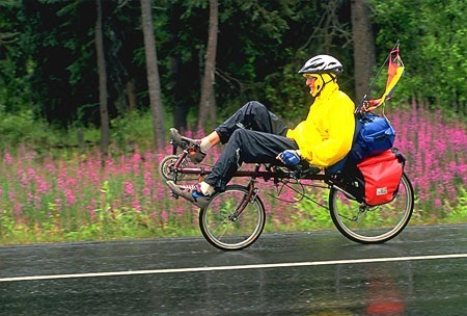
 And I was passed 3 times by people in their 70s riding these: